 Whatsapp
 Call now

Hair Transplant Results: When Will They Appear?
Hair transplant is one of the most popular and permanent solutions for those struggling with hair loss. Thanks to advancements in technology and surgical techniques, people can now achieve their desired look naturally. However, one of the most common questions patients ask is how long to see hair transplant results.
Hair transplantation is not an instant procedure but a gradual process. Understanding the stages of hair regrowth and when to expect results helps patients stay patient and manage the process better. If you wonder how long to see hair transplant results, this guide will clarify the timeline step by step.
Table of Contents
ToggleWhat Happens Immediately After the Procedure?
The focus after surgery is on healing. Patients may notice mild redness and swelling in the transplanted area, as well as small scabs where grafts were placed. Sensitivity or tightness of the scalp is also common in the early stages of recovery.
These symptoms are normal and usually subside within 7–10 days. Specialists usually recommend gentle washing and advise avoiding direct sunlight, scratching, and strenuous physical activities. Strict adherence to post-operative care in the first days is crucial to prevent infection and optimize healing.
New hair does not grow immediately after the procedure. The transplanted hairs and some surrounding hairs may shed within the first two weeks after the surgery. This is called shock loss and is temporary. Knowing how long to see hair transplant results helps patients stay calm during this phase.
Understanding the Hair Growth Cycle and Shock Loss
To understand why hair growth takes time, it is helpful to know the natural hair growth cycle. This cycle consists of three phases:
Anagen Phase (Growth): The active growth phase where hair grows about 1 cm per month and lasts several years.
Catagen Phase (Transition): A short phase (2–3 weeks) during which hair growth slows down and follicles shrink.
Telogen Phase (Resting): Lasting about 3 months, this is the resting phase where hair stops growing but remains attached before eventually shedding to make way for new growth.
After a hair transplant, follicles enter the telogen phase, which causes shock loss. This shedding is temporary and indicates that the follicles are resetting to produce new hair. Understanding this cycle is key to grasping the answer to the question, “How long does it take to see hair transplant results?” The information is based on scientific studies examining hair transplant outcomes.

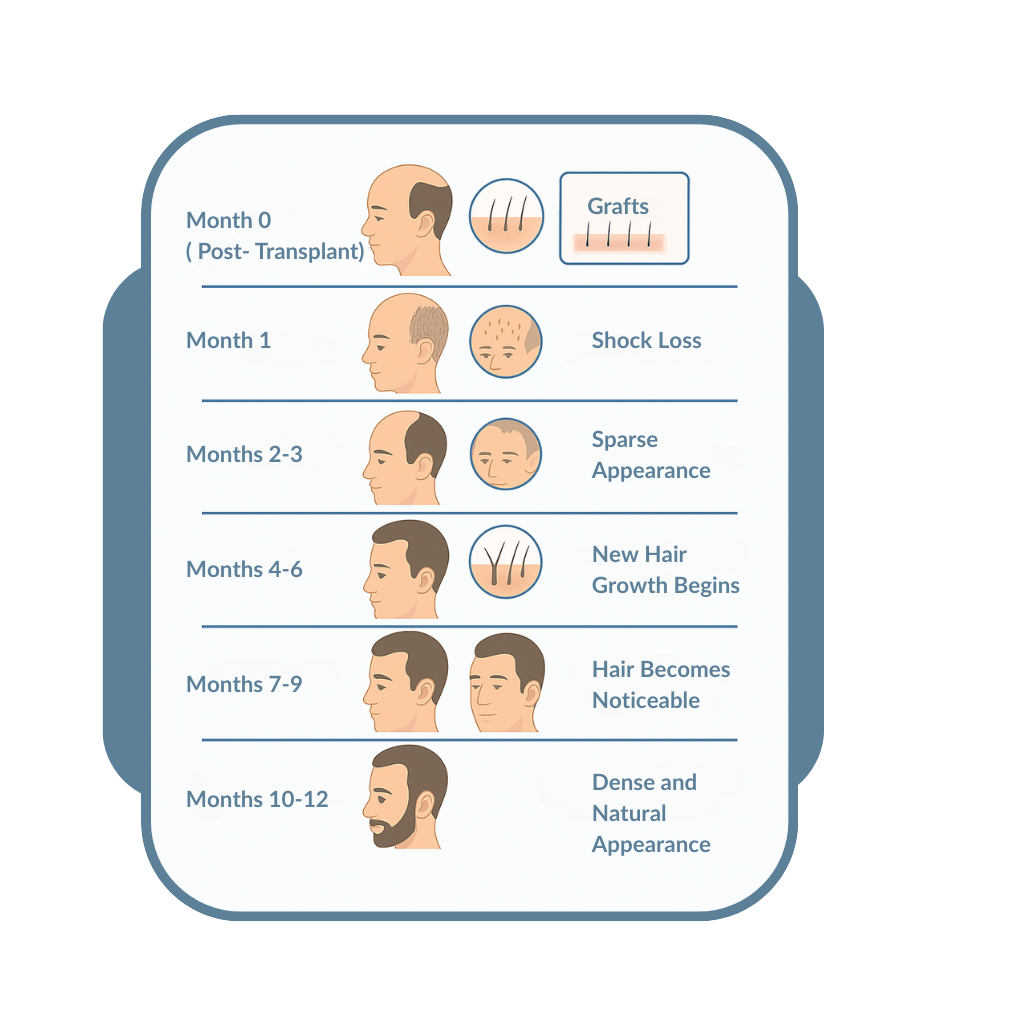
Month-by-Month Hair Transplant Results Timeline
Month 1: Shedding Phase
During the first month, almost all transplanted hairs fall out. This can be discouraging but is an expected and necessary part of the process. The scalp may look similar to how it did before the surgery.
Months 2–3: Dormant Phase
Little to no visible changes occur, but beneath the skin, follicles prepare to regrow. This period is critical, and strict adherence to post-transplant care such as avoiding trauma to the scalp is essential.
Months 4–5: Initial Growth
Fine, thin hairs begin to appear; they are usually lighter in color and softer in texture. Growth may be patchy and uneven but indicates that follicles are active again.
Months 6–8: Noticeable Hair Growth
Hair starts to thicken, darken, and fill in. Typically, 50-60% of the expected growth becomes visible. Density increases in treated areas, and most patients can style their hair more confidently, boosting psychological confidence.
Months 9–12: Maturity Stage
Hair continues to thicken and blend naturally with existing hair; 80-90% of the final result is visible. Patients can resume normal activities like haircuts and coloring during this period.
Months 12–18: Final Results
Hair reaches full maturity in texture, length, and strength. Minor irregularities correct over time, and transplanted hair looks and feels completely natural.
This gradual progression helps answer the common question of how long to see hair transplant results and outlines a clear hair transplant results timeline.
Factors Influencing How Long to See Hair Transplant Results
The timeline varies depending on several factors:
Surgical Technique (FUE vs FUT): Both methods are effective; however, FUE recovery tends to be faster with less scarring and more comfort in early healing, though the overall hair growth timing is similar.
Individual Physiology: Genetics and overall health affect how quickly follicles regenerate and grow.
Hair Characteristics: Curly, thick, or dark hair generally provides better early coverage than fine, straight, or light-coloured hair.
Post-Operative Care: Following care instructions such as gentle washing, avoiding harsh chemicals, and protecting the scalp is critical for optimal growth and preventing complications.
Surgeon Experience and Graft Placement: Expert placement is important for a natural appearance and follicle survival.
All these factors impact the hair transplant results timeline and thus influence how long to see hair transplant results.
The Impact of Lifestyle on How Long to See Hair Transplant Results
Achieving successful and lasting results after a hair transplant is not limited to surgical technique and the surgeon’s expertise alone. The patient’s lifestyle and daily habits directly affect hair growth and how long to see hair transplant results. Adopting a healthy lifestyle helps hair follicles heal faster and strengthens the transplanted hair.
A good nutrition plan is one of the cornerstones of hair health. A balanced diet rich in protein, zinc, B vitamins, and iron provides the essential nutrients hair follicles need. At the same time, smoking and excessive alcohol consumption negatively affect blood flow to the hair follicles and slow down the healing process. Therefore, avoiding smoking and alcohol after the transplant increases the chances of success.
Drinking plenty of water creates a healthy scalp environment and contributes to strengthening hair roots. High stress levels can trigger hair loss, so practices such as meditation, light exercise, or other relaxation techniques are recommended. Additionally, tight hairstyles or activities that irritate the scalp should be avoided after the transplant. Wearing protective hats or taking measures to shield the scalp from sunlight also supports recovery.
Additionally, maintaining regular sleep patterns is important for hair health. During sleep, the body regenerates and releases hormones necessary for strengthening hair follicles. Insufficient sleep can negatively impact hair growth. Gently massaging the scalp regularly increases blood circulation and supports follicle nourishment. Moreover, the recommended and regular use of medical products after hair transplantation accelerates the healing process. Applying all these lifestyle habits together increases the durability of hair transplant results and helps preserve a natural appearance.
In conclusion, besides medical care, positive lifestyle changes play a decisive role in the longevity and natural appearance of hair transplant results. Regular doctor check-ups and adherence to recommended lifestyle habits are key to achieving healthy and strong hair, which directly influences how long to see hair transplant results.
The Psychological Impact of Hair Transplantation and Managing Expectations
While the physical timeline of hair growth is important, the psychological journey is equally critical. Hair loss can deeply affect self-confidence and mental well-being. Because the results of a hair transplant take time to become visible, patients often need emotional support and encouragement throughout the process.
Setting realistic expectations before the procedure can help reduce anxiety during early shedding and the slow growth phases. Many clinics provide detailed growth timelines and offer support groups or counseling services to help patients emotionally adjust to the journey.
Advancements in Hair Transplant Technology and Their Impact on Recovery
Continuous advancements in medical technology have made hair transplant procedures less invasive and more effective. Robotic systems used in follicular unit extraction (FUE) allow for highly precise graft harvesting and placement, minimizing scalp trauma and speeding up recovery.
Additionally, regenerative treatments such as platelet-rich plasma (PRP) therapy are often used alongside hair transplants to support healing and boost follicle activity. These innovations improve the overall patient experience and may contribute to faster and more visible results.

How Long Does Full Growth Take?
Hair transplantation is not a quick fix; it requires time, patience, and proper care to achieve full and lasting results. Immediately following the procedure, patients may experience a phase known as shock shedding, during which transplanted hairs temporarily fall out. This phase, though often concerning, is a normal and necessary part of the hair growth cycle, as it allows the follicles to reset and prepare for new growth.
Visible improvements typically begin to appear between 9 to 12 months post-surgery. However, this timeline can vary based on several factors, including hair type, individual health, age, and the specific surgical technique employed. During this period, new hair strands gradually thicken, gain density, and blend seamlessly with existing hair, restoring a natural look and boosting patient confidence.
In some cases, especially when fine or curly hair is involved, or if the patient’s biology requires more time, full maturation of the transplanted hair may take up to 18 months. Though the waiting period can feel lengthy, maintaining realistic expectations and following post-operative care instructions are key to maximizing results.
The table on the side illustrates the average hair regrowth progression over time, helping patients better understand the gradual nature of the transformation and set realistic goals for their hair restoration journey.